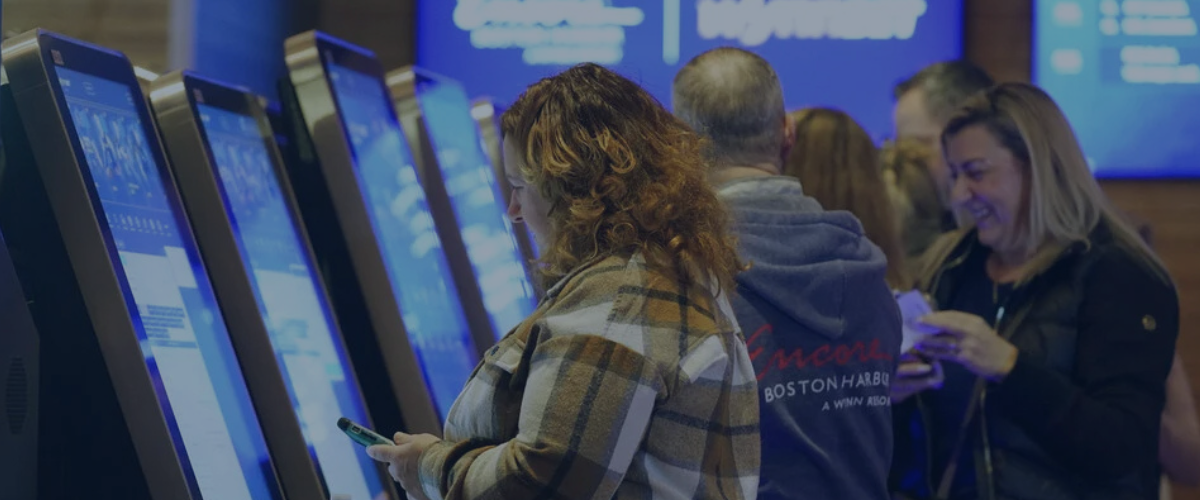
The Modern Betting Shop: What Customers Expect in 2027
The betting shop has changed considerably over the past decade, but so have the people walking through its doors. Today’s customers are accustomed to fast transactions, convenient payment options and technology that makes everyday activities easier. From ordering food to checking in at airports, self-service has become a familiar part of modern life.
In retail sports betting, transaction density is hyper-concentrated – often driving over 70% of peak revenue into narrow windows right before major race meets or kick-offs. While self-service is now common across everyday life, for betting operators it is a critical tool to capture peak throughput.
So, what will the modern betting customer expect in 2027, and how can operators invest in the technology and infrastructure needed to respond?
The economics of betting are changing
Operators don’t have to look far to see how quickly commercial conditions can shift. For example, in the UK, Remote Gaming Duty increased from 21% to 40% in April 2026, while remote betting is due to move to a 25% rate from April 2027. Bets placed through self-service betting terminals in licensed premises remain subject to the existing 15% rate.
Tax is just one pressure. Operators also have to contend with evolving regulation, increasing operating costs, competition between physical and digital channels and customers whose expectations are being shaped by experiences well beyond the betting industry. What worked commercially five years ago may not necessarily work five years from now.
That makes efficiency increasingly important. When margins come under pressure, infrastructure that is expensive to maintain, difficult to update or unable to accommodate changing requirements can quickly become an operational constraint.
Convenience is no longer a competitive advantage
Convenience has become a baseline expectation across consumer-facing industries. Customers want to complete transactions quickly, find what they’re looking for without unnecessary complications and move between different services with minimal friction.
In a betting shop, this might mean placing a wager without waiting for an available cashier, accessing relevant betting markets easily or completing a transaction through a familiar payment method. The ability to serve customers efficiently becomes particularly important during major sporting events, when demand can increase dramatically over a relatively short period.
For operators, self-service betting terminals can help distribute transaction volumes across the shop floor, reduce pressure on employees and minimise the risk of queue abandonment during busy periods. By enabling more customers to complete routine transactions independently, operators can also optimise staff allocation, allowing employees to focus on customer assistance and other activities that benefit from personal interaction.
Engineering a reliable self-service experience
Customers rarely visit a betting shop because they’re interested in the technology itself. They want to place a bet, check available markets or collect their winnings. Behind that straightforward experience, however, is a combination of hardware engineering, payment integration and component reliability that determines how consistently a terminal performs.
For operators planning investments in 2027, the technical specification of self-service equipment deserves careful consideration. Terminals must withstand frequent use, accommodate different payment requirements and remain operational during periods of high demand.
Several hardware considerations are particularly important:
- Thermal and component lifecycle management: Effective heat management, appropriate component selection and serviceable hardware configurations can support long-term reliability and reduce the risk of premature equipment failure.
- Cash and multi-currency acceptance: Efficient cash handling, reliable note and coin acceptance, and payment configurations suited to local markets can help streamline transactions and accommodate different customer preferences.
- Display durability and performance: Commercial-grade touchscreens, responsive displays and robust protective materials are essential for terminals operating in busy, high-use retail environments.
- Maintenance and accessibility: Accessible internal components, practical servicing arrangements and ergonomic terminal designs can simplify maintenance while supporting a wider range of customer needs.
These considerations directly influence the total cost of ownership (TCO). While the initial purchase price remains important, operators must also account for equipment lifespan, maintenance requirements, component replacement and potential downtime.
Investing in dependable, appropriately specified hardware can help operators manage these costs while delivering the consistent experience customers increasingly expect.
The physical environment still matters
While technology has transformed how people interact with betting services, the physical betting shop continues to offer something different from a purely digital experience.
For many customers, visiting a betting shop is connected to the atmosphere of live sport, the social environment and the experience of following events alongside other people. The layout, accessibility and overall presentation of a venue can influence how comfortably customers engage with these activities.
However, no two betting shops are exactly alike. Available floor space, customer traffic, existing infrastructure and operational requirements can vary significantly between locations. This makes adaptable terminal design an important consideration for operators looking to modernise their retail estates.
Modular hardware configurations allow self-service technology to be tailored to different environments. Wall-mounted terminals can help maximise available floor space, compact countertop units can introduce self-service functionality into smaller venues, and full-standing dual-screen cabinets can provide a more prominent customer-facing experience in larger locations.
For operators managing multiple retail locations, the ability to adapt terminal configurations to individual shop requirements can support more efficient deployments and better use of existing space. Thoughtful positioning can also improve customer flow, reduce congestion around service counters and help create a more comfortable betting environment.
Building for 2027 and beyond
Perhaps the biggest challenge facing retail betting operators in 2027 is that customer expectations will not remain static. Experiences in other industries will continue to influence what customers consider convenient, accessible and worthwhile.
This means technology investments need to account for future requirements as well as immediate operational needs. Beyond customer-facing functionality, operators should consider how equipment can support long-term commercial performance through reduced maintenance demands, efficient staff allocation and improved transaction capacity.
A terminal that performs reliably, fits the available space and can be maintained efficiently offers value throughout its operational lifespan. For operators planning larger deployments, these factors become increasingly important when evaluating total cost of ownership and the potential return on investment.
Partnering with KT Group
As retail betting environments evolve, choosing the right technology partner will be an important part of preparing for 2027 and beyond.
At KT Group, we work with operators to develop self-service solutions tailored to their operational requirements. From hardware engineering and terminal configurations to payment integration and scalable deployment, our focus is on delivering reliable technology that works within the realities of individual retail environments.
Whether introducing compact terminals into space-constrained locations, upgrading existing equipment or planning a wider rollout of next-generation betting terminals, we help operators consider the practical and commercial requirements behind every deployment.
Planning your next-generation terminal deployment? Explore KT Group’s self-service kiosk solutions and speak to our team about developing a configuration that meets your operational needs.

Discuss what lies in store for 2027 with Kenneth Larsen.